
System Skepticism
Learning to love Laughing Gull systems I thought I might hate.

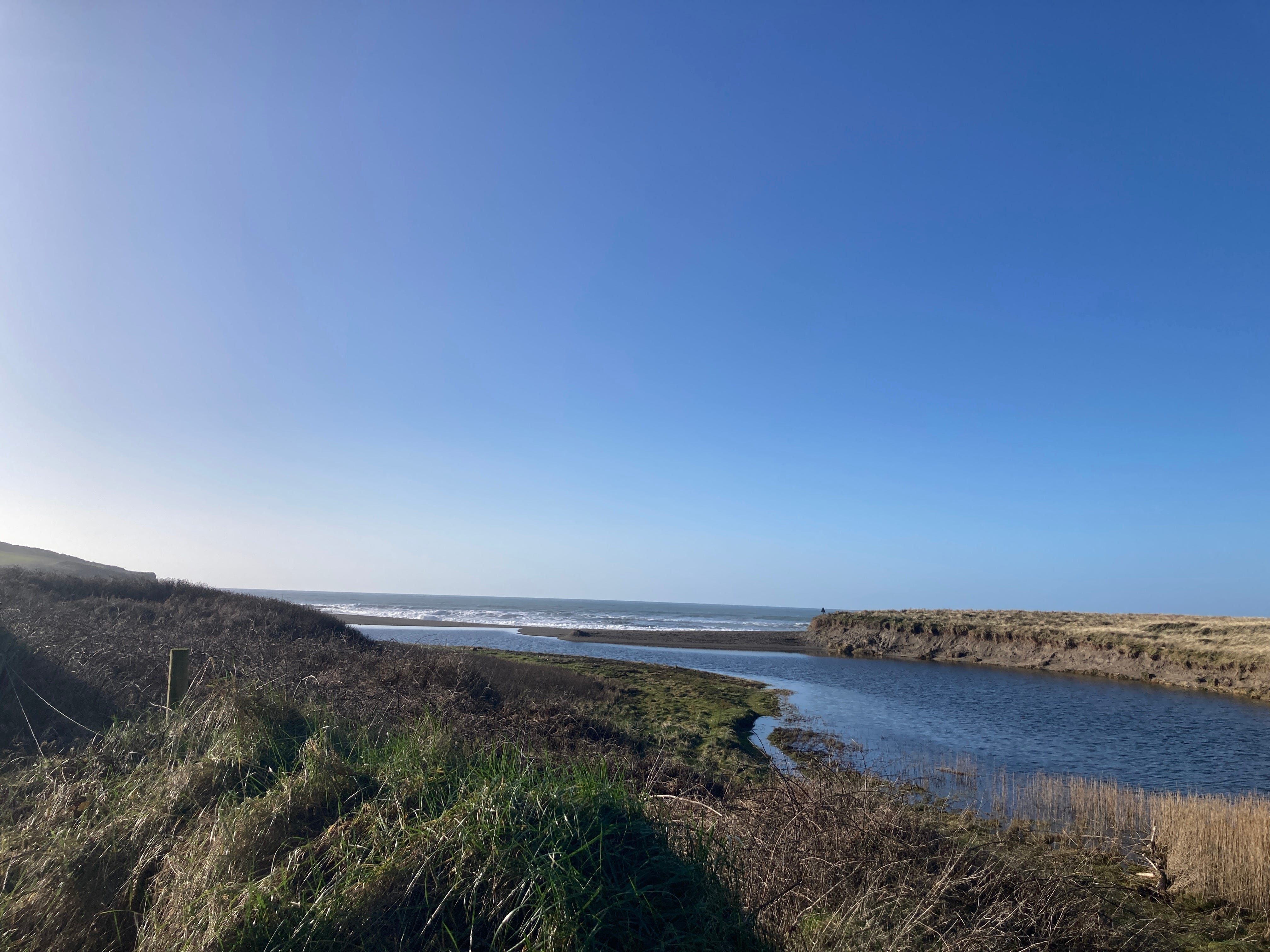
In Ireland, there is a culture of getting outdoors regardless of the weather. I like that. The outdoors is beautiful and rewarding in the rain, in the snow, in the cold, in the heat. We have adaptable bodies and plenty of clothing choices. I stand against the idea that we are only comfortable in a narrow range of conditions. If you go out into fresh air, regardless of the conditions, I am pretty sure you will feel happy.
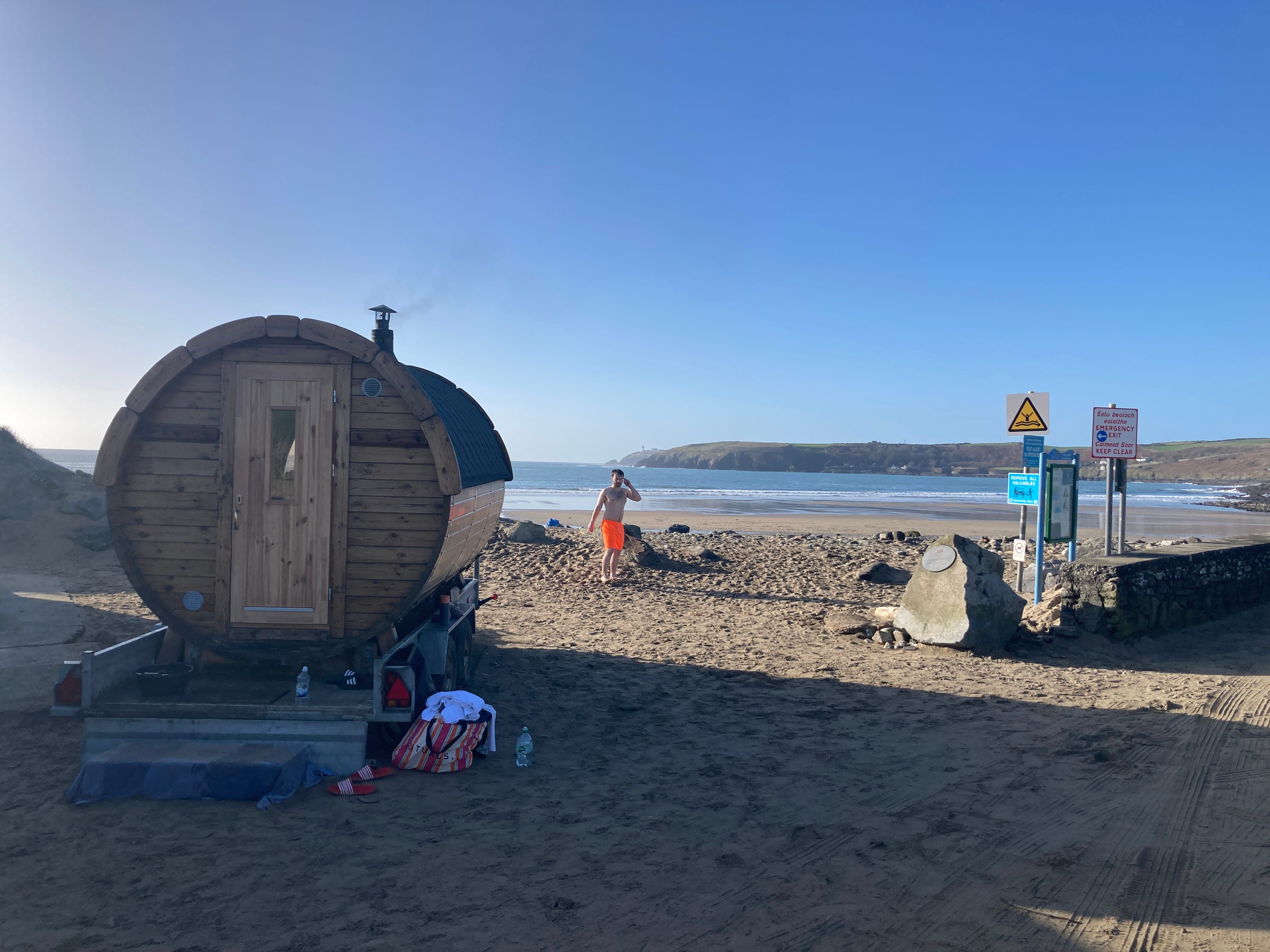
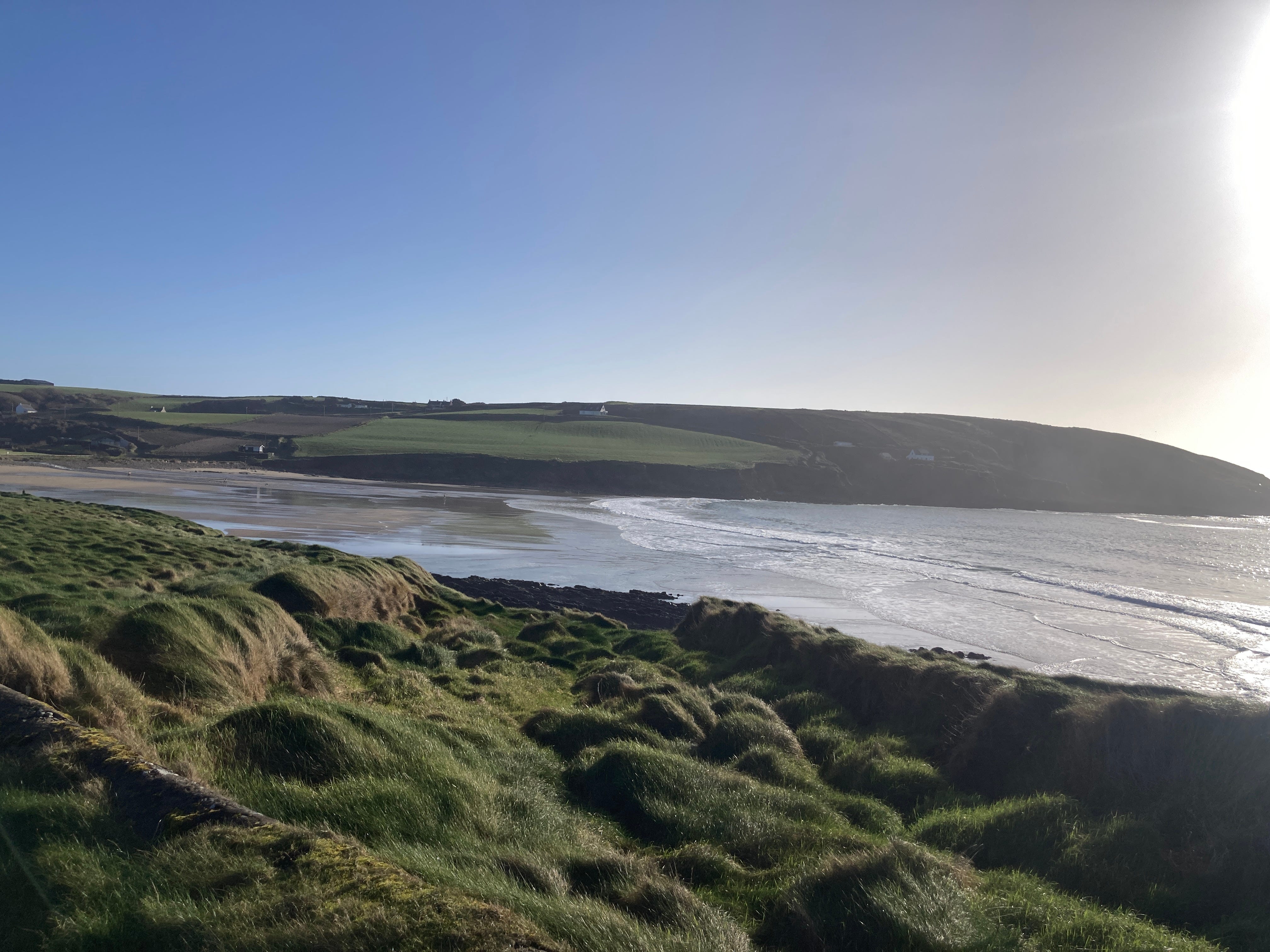
Still, when the weather is perfect, there is no need for any hesitation or debate. This past Sunday in West Cork the sky was a deep blue, the sun warmed the winter landscape, and the winds were light. It was a welcome winter reminder that there is no landscape more beautiful than West Cork when the weather is singing to you.
After considering a kayak, I jumped on my bike and toured the coast. Most of Ireland joined me. I saw runners, walkers, cyclists, swimmers, beachgoers, birdwatchers, gardeners, sauna-ers, and horse and buggy-ers. It was quite the crowd. The mood was festive and friendly. The whole day was a vivifying harbinger of warmer, drier, seasons to come.
Sadly, today we are back to scudding clouds, wind and rain. The weather gods are back to growling. Let them do their worst. Sunday sublimity lingers and puts me in mind of Laughing Gull and adventures to come. So it might be a good time to do something I have had in mind: review where I now stand on many of the systems aboard—some of which I initially regarded with notable skepticism.
When I first looked at Laughing Gull for purchase, I carried a somewhat conservative old-school view with regard to systems that are more about convenience than safety or sailing. As in, I didn’t want too many of them. The more systems you have, the more complexity you have, the more maintenance you have, the more downtime waiting for parts you have. I wasn’t quite in Larry and Lin Pardey territory (“Go small, go simple, but go now”). But many of Laughing Gull’s systems were new to me and I wondered whether they would be worth having.
Number 1 on my “Dubious List” was the washer/dryer tucked into the cabinetry in the forward cabin. So suburban, so soft-core. It requires running the generator. It uses fresh water. How long could its delicate parts endure the motion and rustification of a life at sea. Sailors for centuries had done fine with just a bucket and some dishwashing soap. I started thinking about how I might use the space if I ripped it out.
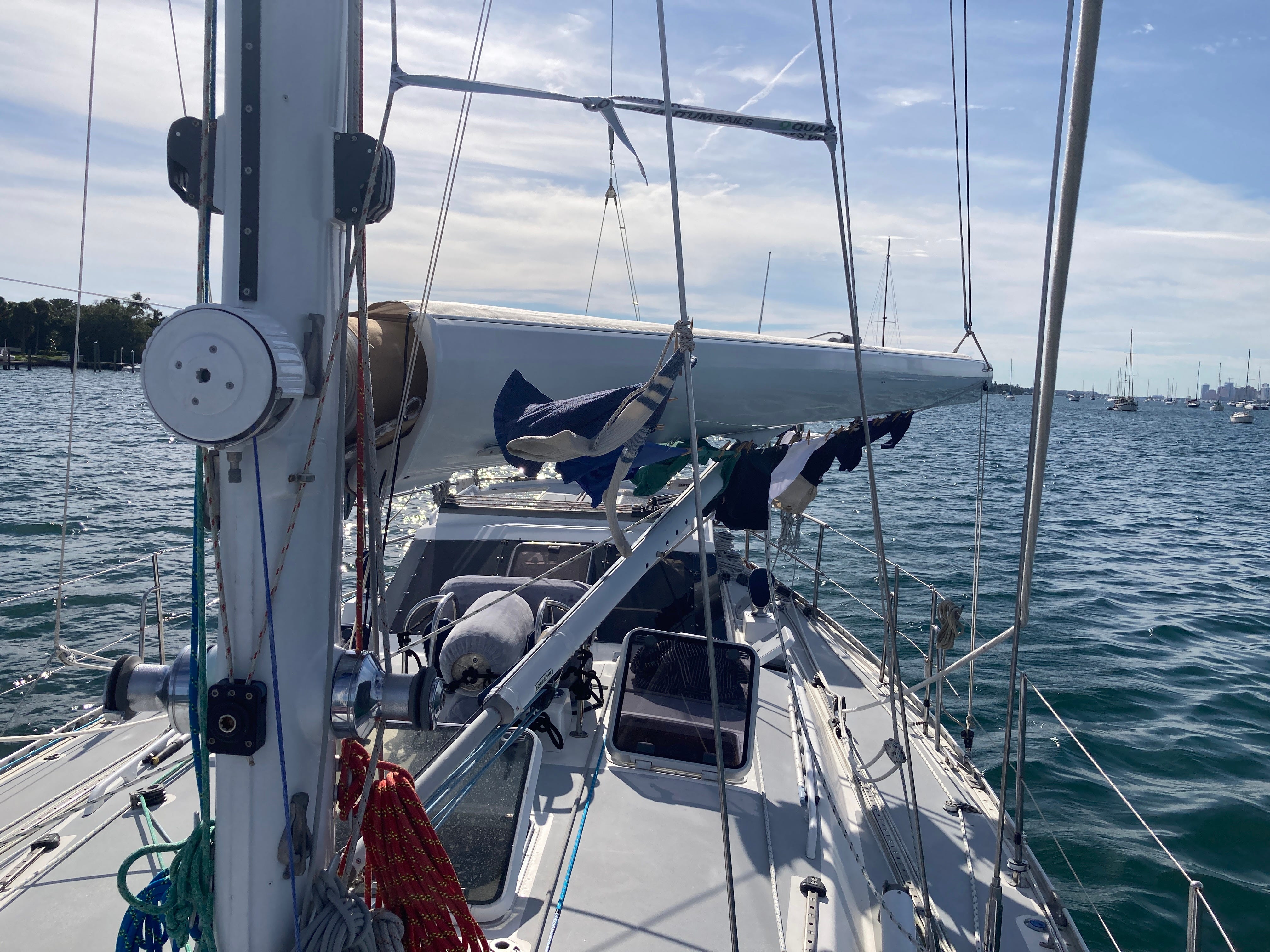
More modern sailing friends, witnessing my acid scorn, pushed back hard. “Just keep for a bit and see what you think,” they gently counseled. I did—mainly because it was too much trouble to remove and I wanted to follow part three of the Pardeys’ advice and just get going. Now that I have used the machine for a few years, well…mea culpa. I am a dummy.
What I didn’t anticipate at all was the degree to which having a washing machine on board liberates you from the need to find laundromats ashore (hardly anyone uses buckets anymore). No going into a town when you’d rather chill in a remote anchorage. No lugging oversized bags of smelly laundry through town. No paying extortionate fees to wash and dry a single load. No sitting around waiting for a machine while the cruiser who got there just before you does his six loads. Instead, I could relax at anchor, or spend my time ashore in unsmelly clothing at a good coffee shop or bar. Way better.
I still don’t think anyone NEEDS a washing machine on a boat (and certainly not a dishwasher! I draw the line somewhere!). But right now I love being able to do wash aboard. Major Important Caveat (MIC): Said washer has to be in working condition. My favorable view is entirely contingent on the fact that the washer on Laughing Gull has yet to break down. If and when it does, I may have to revise.
The other system that is key to freedom aboard a sailboat, which is to say freedom from towns and marinas, is a watermaker. LG has two large water tanks which hold more than 200 gallons of fresh water. That much water could easily last a month or more if you were careful with it. With a watermaker, though, you have virtually unlimited water. I don’t treat my freshwater supply as anything like unlimited, because I don’t want to have to run the watermaker often (it makes about 25 gallons and also requires the generator). But the fact that I can use the clothes washer and not worry about how many showers anyone is taking, and never have to go to a marina to fill my water tanks, is a much appreciated form of freedom. Not to mention the fact that I can also voyage to remote areas and linger as long as I like without thinking about my water supply.
I was never skeptical about having a watermaker. I just had no real understanding of how it would help me cut the cord to shore, and how good that would feel. Same MIC as above: the watermaker has to work. My chat groups were often filled with cruisers trying to fix a watermaker. So far, fingers crossed, mine has been reliable. But I know the day will come…
Other system notes after a few years of sailing Laughing Gull all over the Atlantic and Caribbean:
Love: the Seagull 800 primo water filter fitted to the galley sink that provides safe (no one sick yet!), good-tasting, water direct from the water tanks. No more plastic water bottles for me. Win in terms of storage. Win in terms of reducing plastic. Every boat should have one.
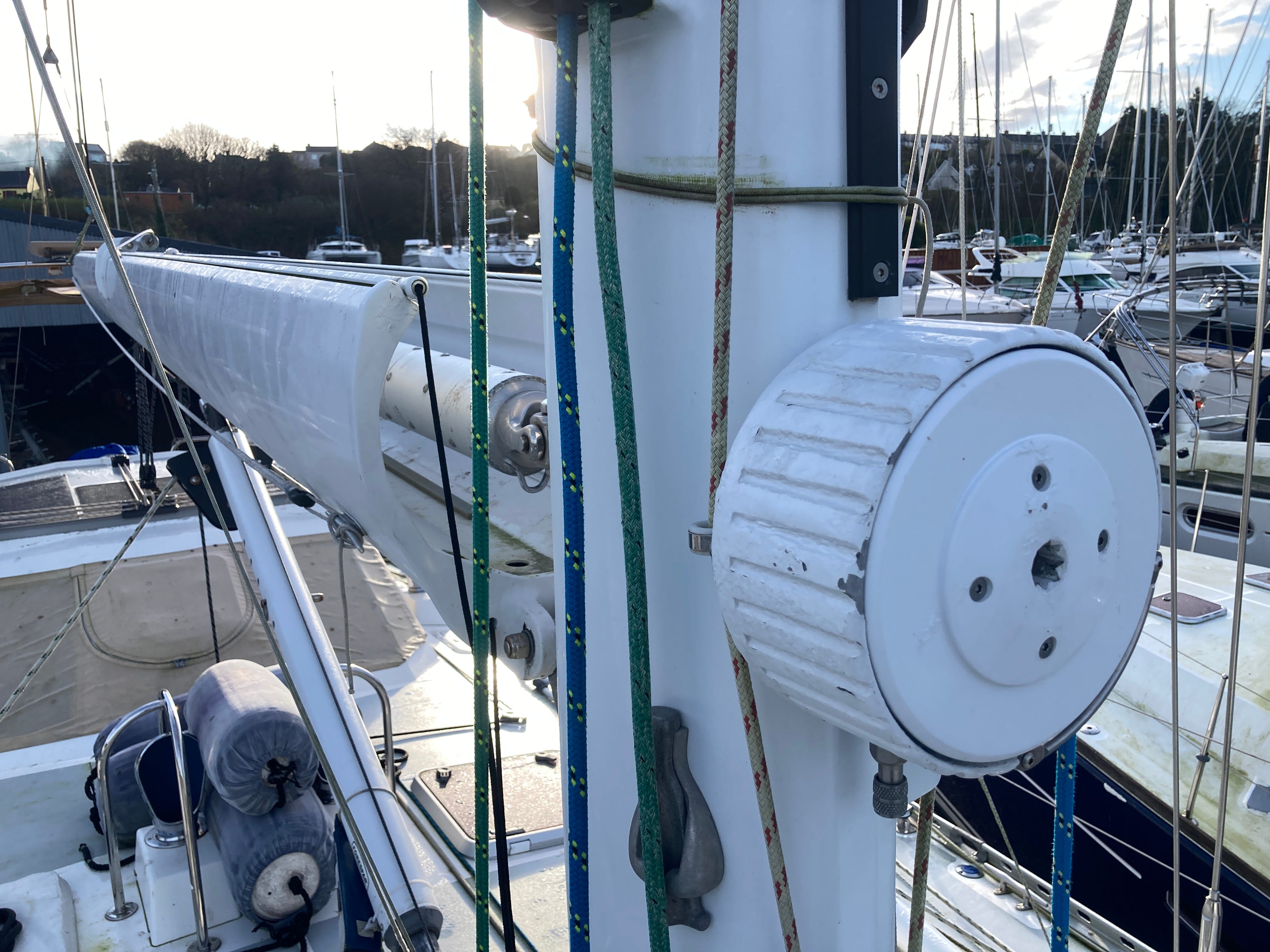
Mixed Feelings: Boom-furling mainsail. Another system I looked at with skepticism, but reserved judgment on to see what I thought after many miles of use. Big plus is convenience, and ease of hoisting and furling solo. Also, infinite reefing and decent sail shape (thanks to full-length battens). Less good: finicky to use until you figure out all the nuances of furling and reefing cleanly; much heavier boom that is a danger to crew and deck structure in an unanticipated gybe (somewhat mitigated by a boom brake AND a good preventer system). Oh, and it ate and broke the arm of one of my crew last summer (more on that in another post). On balance, now that I know the system reasonably well, I am happy with it (and warn everyone to never, ever, ever touch the sail or put their hand in it when the power winch is rolling it into the boom).
Happy To Toss: the reverse cycle AC/Heat system (2 units!). I have never cared about AC on a boat and still can’t believe how many charter crews in the Caribbean prefer to shut themselves in, and run the generator and AC all night. It can also run while plugged in at a US marina, and I have run it exactly twice, mostly to see how it worked. The reverse cycle heat was more useful when I was down in Georgia and northern Florida, and plugged in at a marina one winter. But LG also has a diesel-fired heater which is much more useful because it doesn’t require the generator and is easier to run at sea. I will happily remove the reverse cycle AC/Heat units if I come up with a good reason to go to the trouble to do so. In the meantime it remains dormant, serving as ballast.
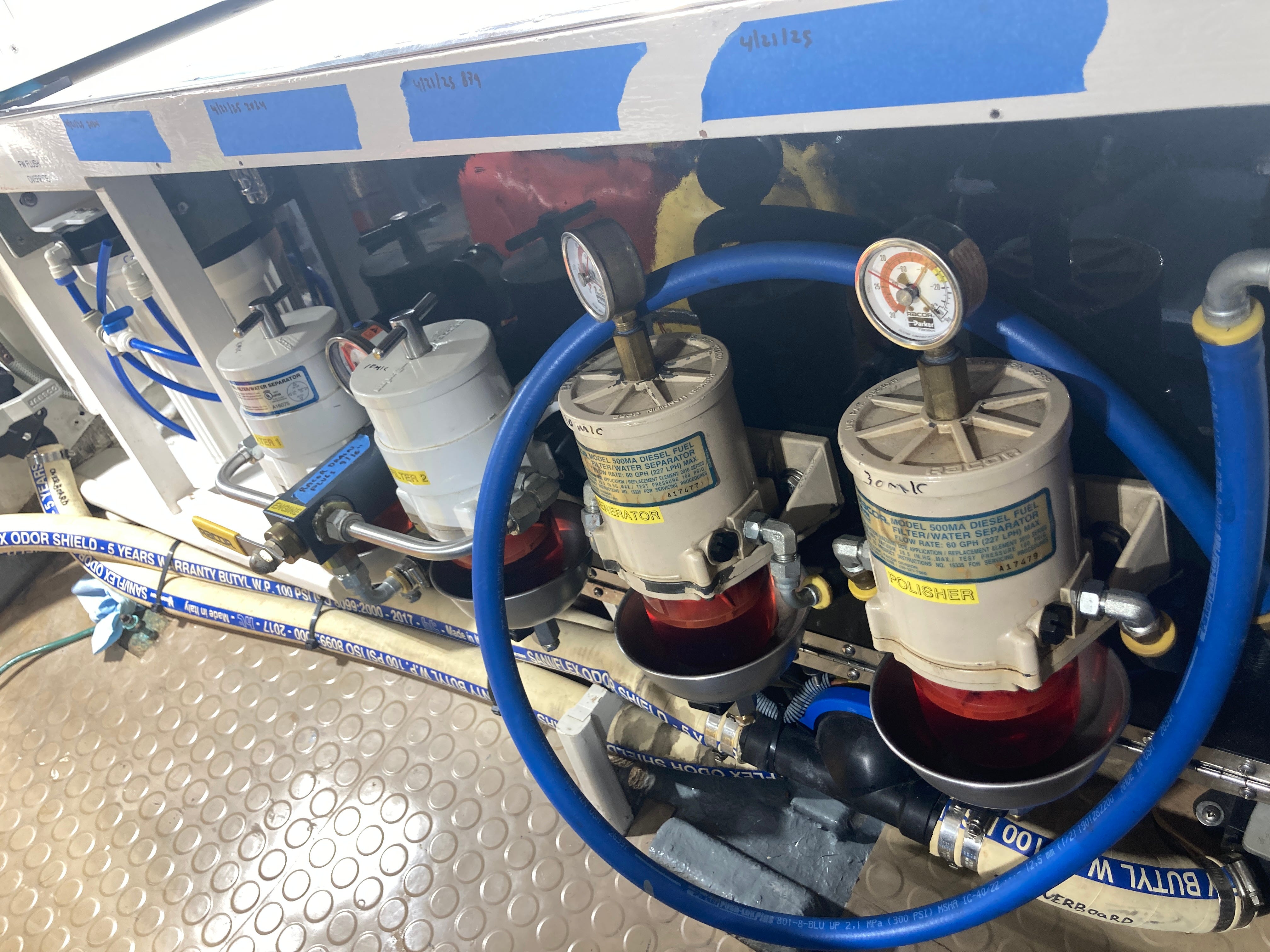
Love: the fuel polishing system the previous owner installed. LG has three diesel tanks which hold around 200 gallons of fuel, and I can run all of that fuel, from any tank, through a Racor polishing filter at a rate of 6 gallons a minute. I do this whenever I take on new fuel, and as soon as there has been enough seaway to stir it all up. So far, the system has prevented any engine shutdowns from clogged fuel filters. And though I take a lot of care to try and buy fuel from fuel docks with good reputations, or who pump a lot of fuel (if they were selling dirty fuel they would not have lots of customers), it is nice to know I always have a way of cleaning fuel that comes aboard dirty or develops algae or bacteria problems.
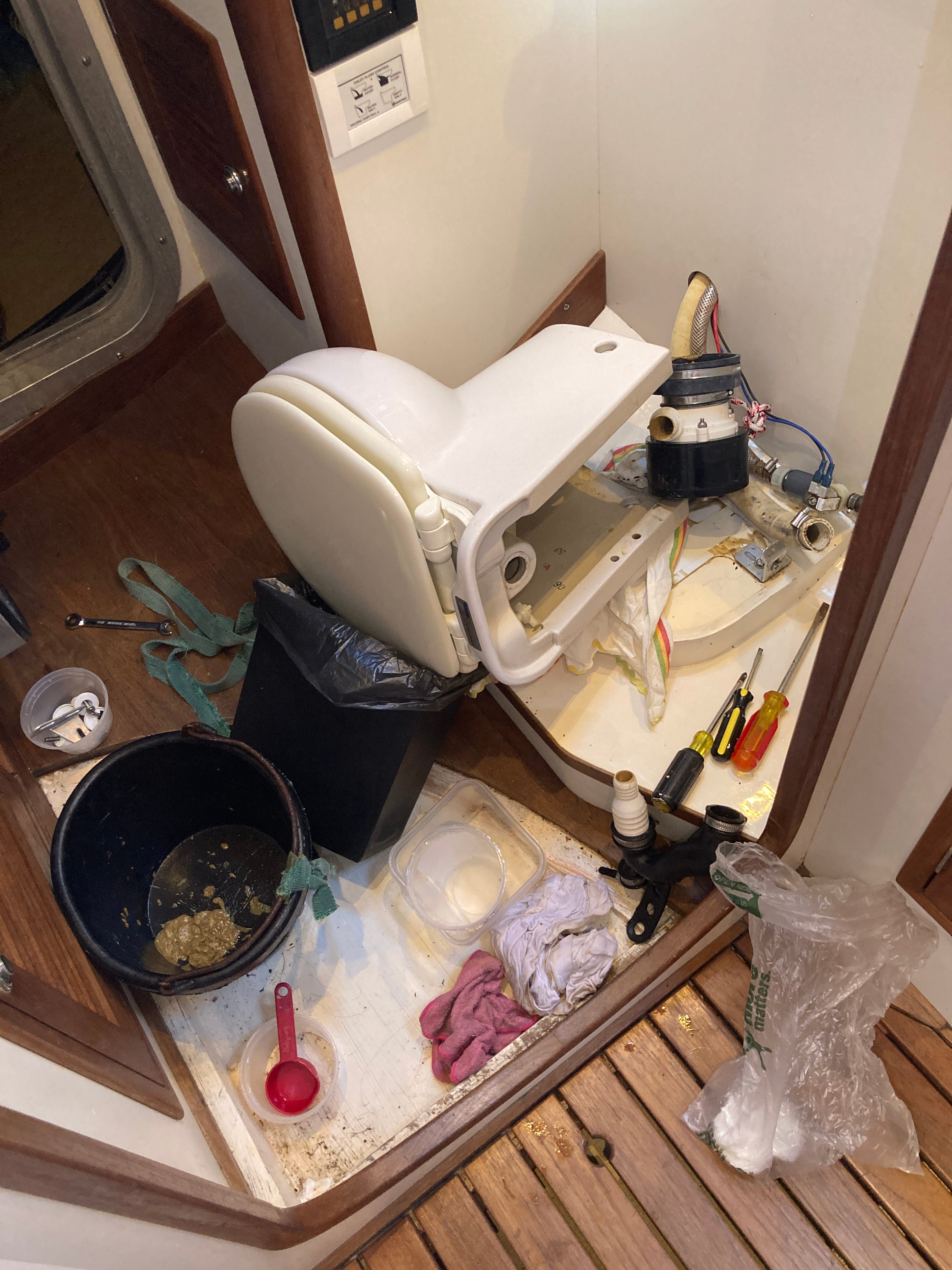
Meh: Electric flush toilets. They clog and they fail just like any other marine head, and down you go for some messy, rubber-gloved, plumbing work. The aft head in LG, especially, is tenuous, because it uses fresh water (to reduce head smells), but uses so little that it is prone to problems. The head up forward in the bow locker is also electric, but it is plumbed for both seawater and fresh water. I leave it set for seawater, which means there is an abundance of liquid to flush it properly. I’ve noticed over time that any crew aboard eventually adopts it as the preferred location for “heavy” work. I’d be fine with simpler, seawater pump toilets, and may eventually end up there.
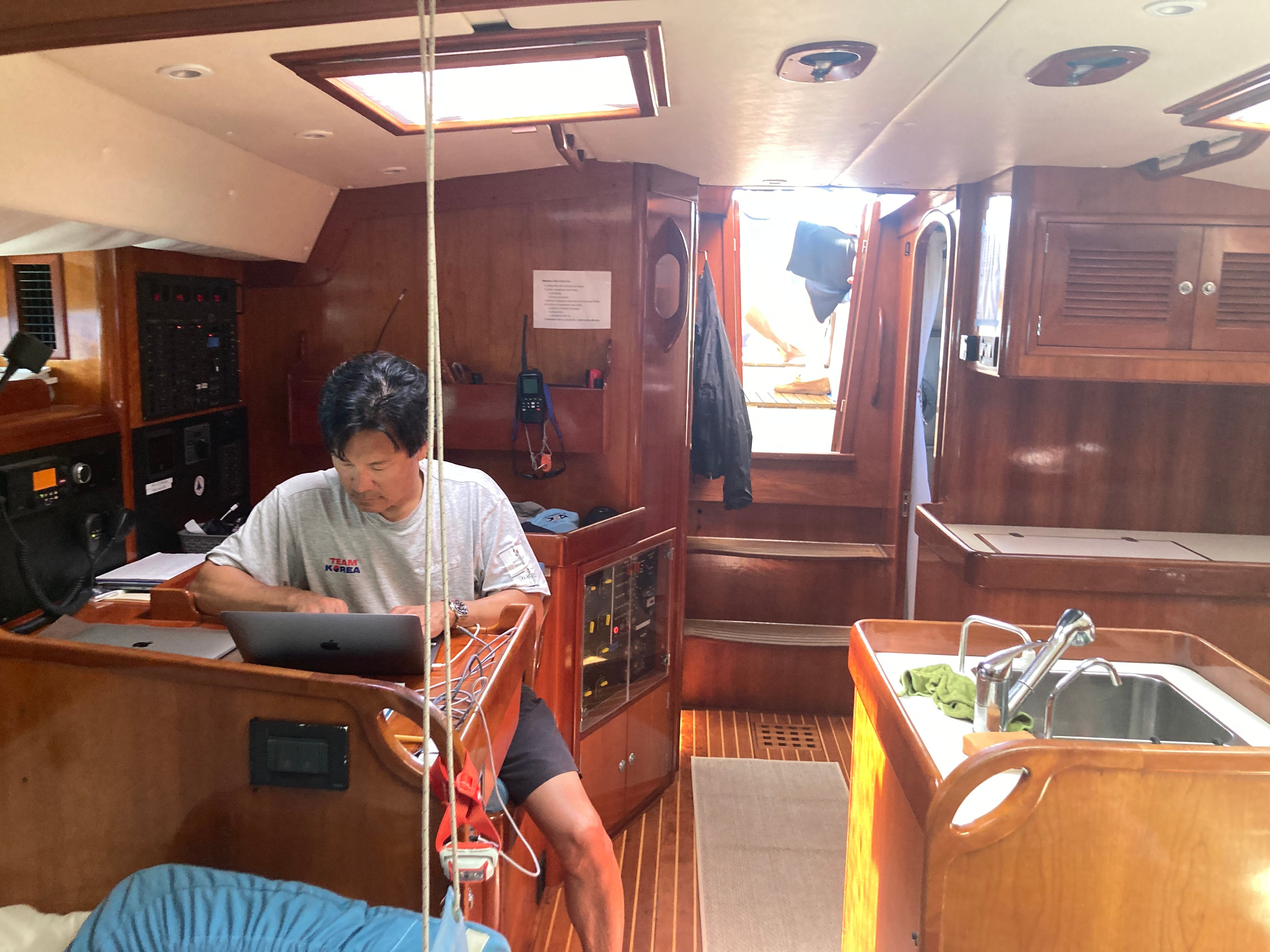
Love/Hate: Starlink. The arrival of fast, affordable, internet aboard sailboats was a revolution. Suddenly, you can work from a sailboat, even in the middle of the ocean. You can stay in touch with anyone on the planet. You can run weather and routing models at sea to your heart’s content. Amazing (even if the endless changes to Starlink’s plans and terms of service have been a Rubik’s cube of frustration and unwelcome surprises). BUT—a Starlink connection also undermines the glorious joy of being cut off from the world and all its vexations, dramas, and conflicts. It also eats up a lot of battery capacity. And, it must be said, Elon Musk is a great inventor but a terrible human.
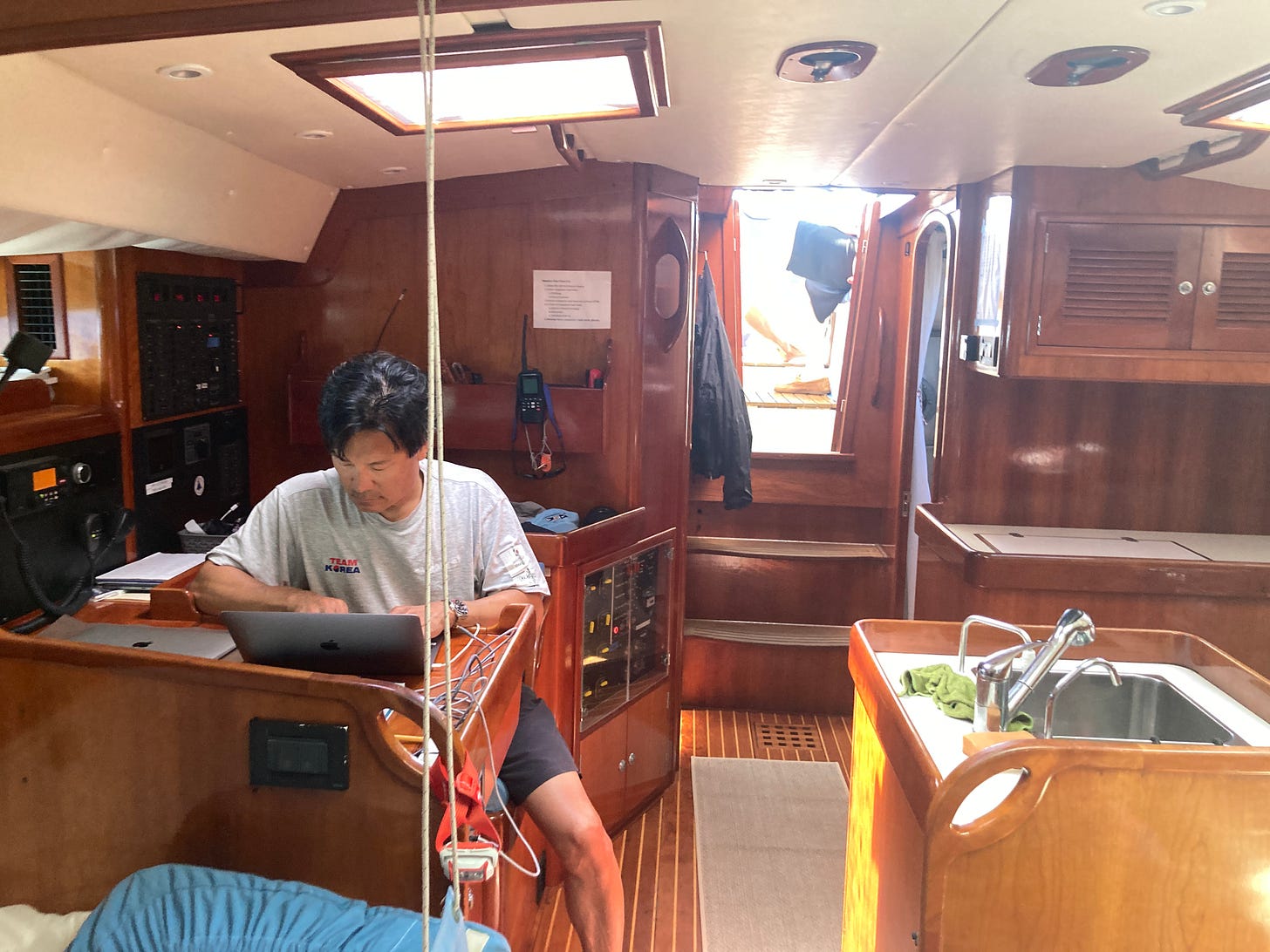
Mid-Atlantic remote doctoring, courtesy of Starlink On balance, though, I am glad to have Starlink. I use it when I need it, and turn it off when I don’t. I tell crew they can turn it on any time they really want it or need it, but at sea ask them not to stream video (which can get expensive, because you pay per gigabyte). Mostly, they are happy to leave it off and detox a bit. I can’t understand cruisers who leave it on all the time while at sea. The last thing I want out there is a news firehose, plus Instagram and TikTok. Perhaps they are running their AC as well?
Hate: Top-down roller furling Asymmetric Spinnaker. This system came with LG and is supposed to make flying a spinnaker easy. The spinnaker is wrapped around a long torsion cable, and you can tack the system to the bow and hoist it when you want to fly a spinnaker. In theory, using a furling line you can easily unroll it and then roll it back up again when you are done. In practice, you MIGHT be able to unroll it, depending on how the last furl went, and you MIGHT be able to roll it back up again if you can avoid having the sail start wrapping in two directions around the torsion cable. This is one that I never figured out. I have now put the spinnaker in a sock and am selling the furling gear. Sometimes, simpler is still better.
That about covers it. Regular readers already know how much I love my hardtop, solar panels, electric outboard, and autopilot. So I guess, in the end, I am more of a modern systems guy than I (thought I) was when I bought Laughing Gull. Reliability will remain the key to happiness. But I can always go back to a wooden raft with a bucket and a square sail if all of these systems start crashing at the same time.
If you liked this post from Sailing Into The Anthropocene, why not subscribe here (free!), and/or hit the share button below? You can also find me on Instagram and BlueSky. (You can find me, but I don’t post much anymore for quality of life reasons).
Great suggestions, thanks